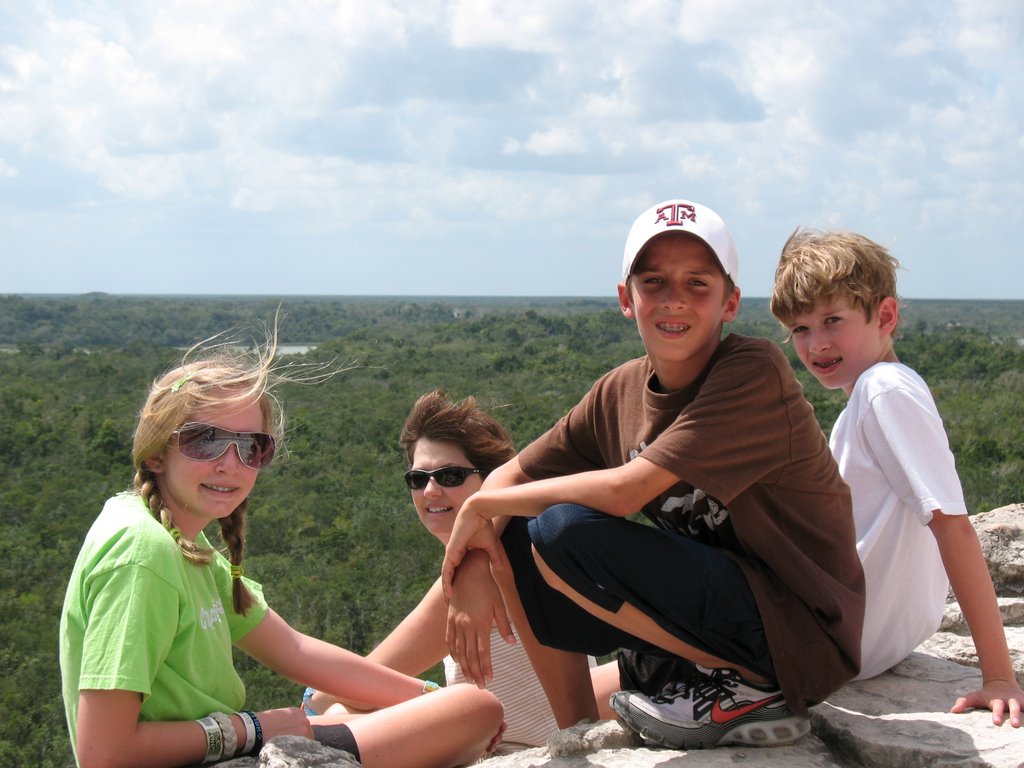
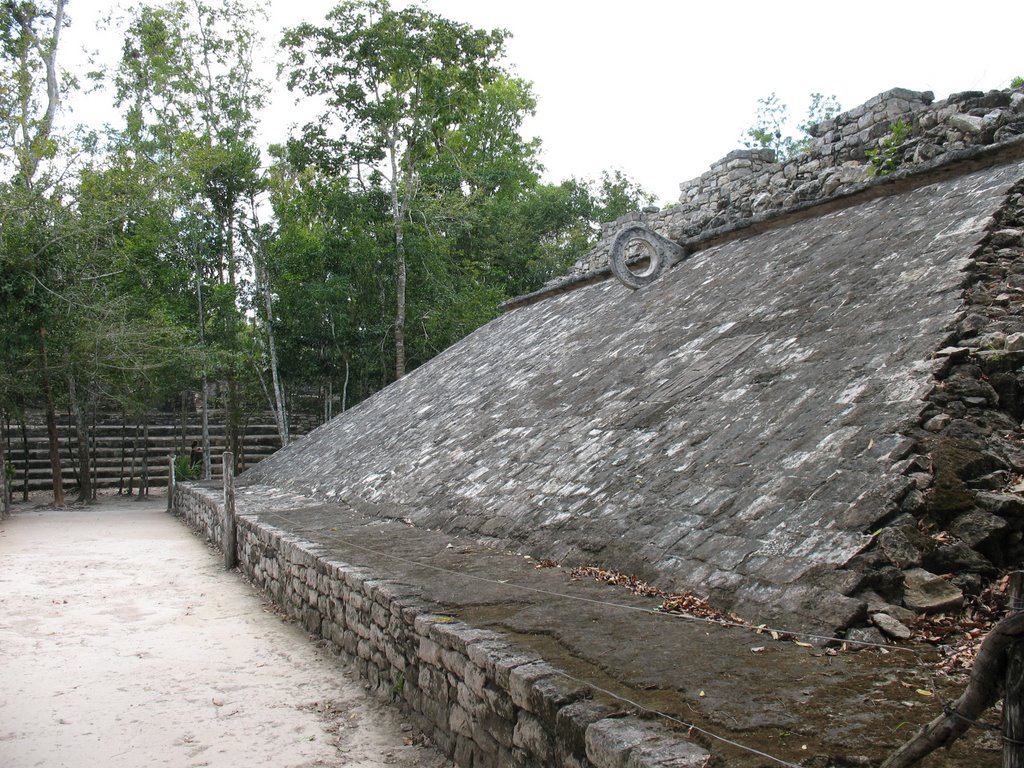
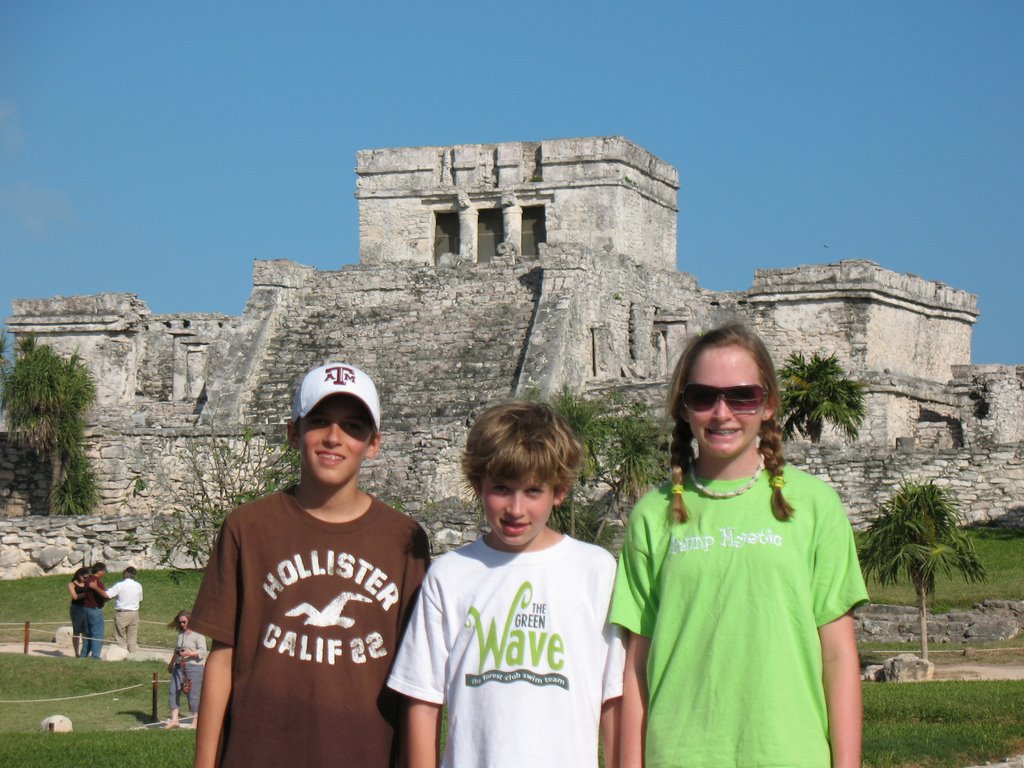
With some time on our hands while waiting on the weather to improve a bit, we visited some more Mayan sites, Coba and Tulum. Coba is about 30 miles inland from the Caribbean coast and is the largest pre-Hispanic site in the Yucatan. The Coba site consists of 4 separate groups of buildings (Coba group, D group, Nohoch Mul group, and Macanxoc group) that are spread out over a very large site. It is more than a mile between each group of buildings. You can either walk or ride a bike to the different groups. The buildings were built around two large lakes which were the Mayans’ source of fresh water. The Coba site is largely unrestored, with small gravel trails cut through the jungle between the sites. Many of the buildings are still covered by dense foliage. Cameron, Haley, and Travis enjoyed Coba because the Nohoch Mul group includes the Nohoch Mul which is the tallest structure in the Mayan Yucatan. It is an asymmetrical pyramid structure about 140 feet tall with a staircase on one side leading to a vaulted room on top. (The Castle [the pyramid] at Chichen Itza is symmetrical with stairs on 4 sides.) Unlike the pyramid at Chichen Itza, they still permit you to climb to the top of the pyramid at Coba, which we did. Nohoch Mul means “big mound” in Mayan, which it certainly is. It is easy to see why the Mayans liked building pyramids because you can see for miles over the jungle from the top. The Coba site also includes some great examples of the roads the Mayans built, which are called Sacbe. There are over 50 roads from Coba. The longest one continues for 62 miles to almost Chichen Itza and is 30 inches high and 32 feet wide. The Sacbe were constructed with two vertical walls of large stones, with the interior filled with smaller stones and dirt and then topped with a stucco substance. After seeing Coba, we drove back to Tulum which is the large Mayan site on the coast. (There are small Mayan sites everywhere. There is a small Mayan building about 500 yards from where we are now.) The temple at Tulum is built on a bluff facing the Caribbean. Tulum was used by the Mayans as a port to move goods up and down the Mayan coast. The ruins at Tulum are completely excavated and in some cases partially restored.
 Cayuse