Menu Close

Cayuse

Sailing triplets

Panama Canal

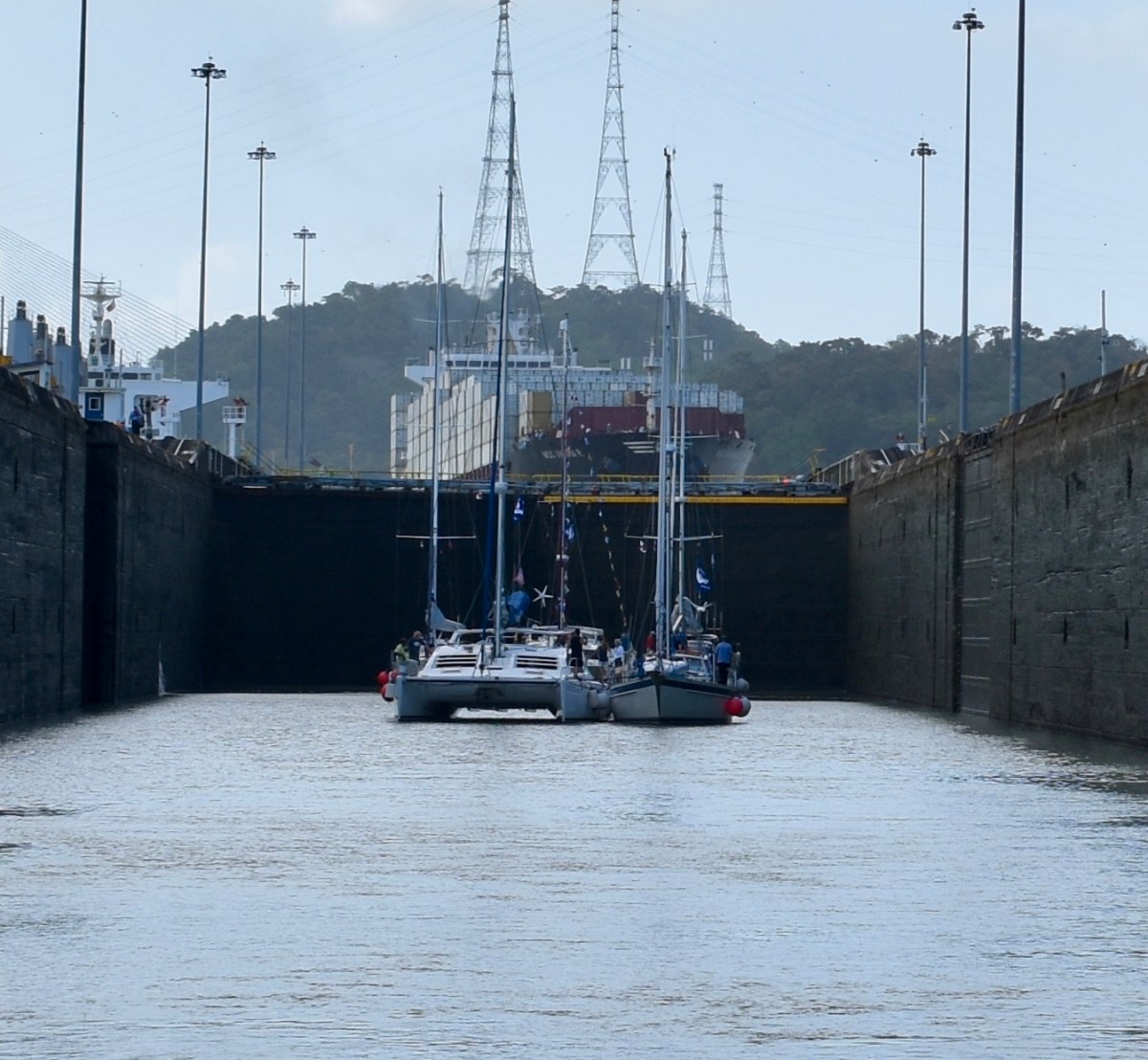
Sunday we start through the Panama Canal. We will go through with 11 other sailboats. We will be in a raft of 3 boats with Cayuse in the middle. The first day we lock up through the 3 chambers of the Gatun locks into Gatun Lake. The lake is 85 feet above sea level. We spend Sunday night in the lake and Monday morning we head across the lake, through the Culebra Cut, and then lock down through the Pedro Miguel lock (1) and the Miraflores locks (2) to Panama City and the Pacific. Here are some pics of the new Agua Clara locks opened last year where the French initially started the canal in the early 1900s. The new locks can handle the new 1100 foot Panamax container ships. There is also a new suspension bridge under construction on the Atlantic side. More pics on Sunday and Monday.

Here are a few pics from our Panama Canal crossing. We started late Sunday afternoon and went up through the Gatun Locks arriving in Gatun Lake after dark. We spent the night in the lake and motored across the lake Monday morning arriving at the Pedro Miguel and Miraflores Locks around 2 pm locking down to the Pacific. We are in Panama City for a few days before we leave for the Galapagos.

Santa Marta, Colombia to San Blas Islands

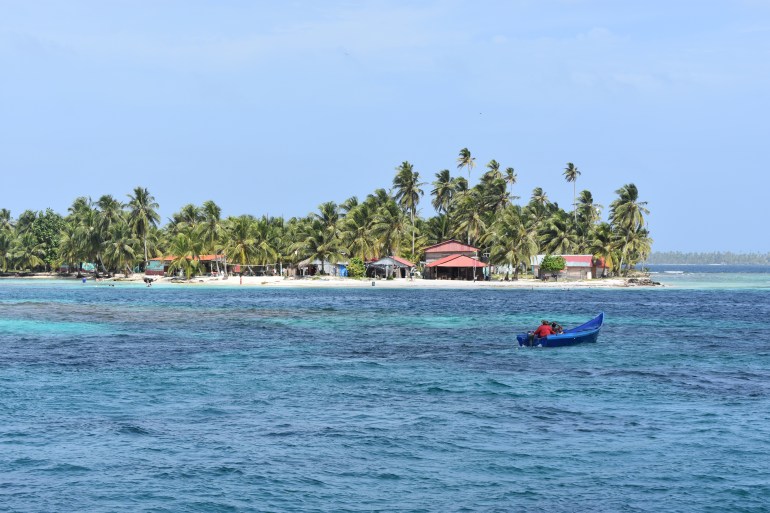
After spending 6 days in Santa Marta, we departed at noon on Wednesday for the San Blas islands. The course is 280 miles, but you have to sail northwest for about 40 miles to get offshore far enough to get clear of all the debris in the water from the rivers in Colombia. We saw lots of trees and stumps in the water, but fortunately did not hit anything. The wind gusted up to 32 knots during the first few hours dropping off to about 25 knots for the rest of the trip. Seas were 6 to 8 feet with occasional larger seas. We started with a double-reefed main and about 50% of the jib. The San Blas islands have numerous reefs and cays, all unmarked and unlit. On top of that, the charts are based on very old surveys in the 1800s and known to be inaccurate. Our goal was to arrive Friday morning at daybreak but the boat was going way too fast. About 30 miles out, we dropped the main and rolled up almost all the jib, but we were still going 4.5 knots to 5 knots under essentially bare poles. The boat handled and sailed surprising well with no sails in the big waves. About 10 miles out, we fore-reached for a couple for hours to wait for the sun. It also was raining with lots of lightning and thunder and no moon. It was so dark that we could not see the horizon except in the lightening strikes. It made for a very exciting landfall! The San Blas islands and the associated mainland territory are called the Kuna Yala and the area is inhabited by the Kuna Indians. They control this quarter of Panama. They live on may of the cays in the islands and are most famous for the molas sold by the Kuna women. Each mola is different representing abstract forms of birds, animals, or marine life. We anchored the first day in the Swimming Pool in the western Holandes Cays. We have few days to explore the San Blas before we sail over to Colon and the Panama Canal.

DSC_0172

DSC_0189.JPG

St. Lucia to Santa Marta, Colombia

After starting the first leg in St. Lucia in a driving rain squall, we headed towards our first waypoint off Peninsula de la Guajira in northeastern Colombia, 620 miles west. The wind was blowing from almost due east, which had us jibing downwind for the next 3 days. We stayed below the rhumbline for most of the leg with next to last jibe occurring about 4 miles north of Aruba. We saw winds of between 15 and 27 knots with higher gusts in the squalls. The highest wind and waves were Sunday night and Monday morning when we had winds steady at 23 to 25 knots and seas at 10 to 12 feet. After reaching our turning point and heading the last 200 miles to Santa Marta, the wind lightened up and we sailed with the Code 0 and Code D, at times surfing to 17 knots. We arrived in Santa Marta around midnight and we were the third boat to arrive in the fleet, covering about 820 miles over the leg. We are spending a few days here exploring Santa Marta and the surrounding beaches and Tayrona National Park. The boat and crew did well and we did not have any major equipment issues.

Starting Back

We were on the move back to France after dropping the Winters off in Corfu, Greece. We sailed first to Leuca, Italy, and then on to Crotone, Rochelle Ionica, and back through the Straits of Messina. Our timing was good going through the straits. We had both the current and wind with us again. After a night in Scilla, we took off for the Aeolian Islands north of Sicily. They are a tricky place to sail in because it is very deep and rocky around the islands, which makes anchoring difficult. We spent a few days waiting on the weather to become more favorable to cross over to Sardinia. It was very hot on the boat (96 F during the day) as southern Europe suffered under an extreme heat wave.

We spent 4 days on Isola di Vulcano and Lipari in the Aeolian islands while a strong mistral blew from the northwest. There were lots of boats in the islands and only a couple of protected anchorages. It was crowded. The day after the mistral blew through we hiked to the top of the volcano on Isola di Vulcano. We had incredible visibility because of the clear, dry air and could easily see the Italian mainland, more than 60 miles away. After a few days there, we needed to continue on our trek back to France. We sailed over to the north coast of Sicily and then sailed 80 miles west to a small bay north of Palermo, Sicily to use as our jumping off point for Sardinia. It is the holiday season here and the Italians were still partying loudly in the clubs on the beach when we got up at 5 am to take off for Sardinia.   We had a very nice 200 mile sail across the Tyrrhenian Sea to town of Arbatax, on the east side near the middle of the island.

More Croatia and Greece

After Cameron and Travis headed back to Houston, Virginia Hare, a friend of Haley’s from Wake Forest, joined us for few days sailing on the boat. She arrived just as the Bora started blowing. The Bora is a katabatic wind that blows hard from the northeast at times in the northern Adriatic. It blew up to 30 knots for a couple of days, which restricted our movement a bit, but we had a great few days sailing.

funboattrip180

After Virginia left, we took a trip by bus over to see Mostar in Bosnia and Herzegovina. The city has the famous Stari Most Bridge and other examples of Islamic architecture from the Ottoman empire. The city also still shows evidence of the Bosnian war. Today the population is made up of about half Croats and half Muslims. After the war, the Serbians left the city.

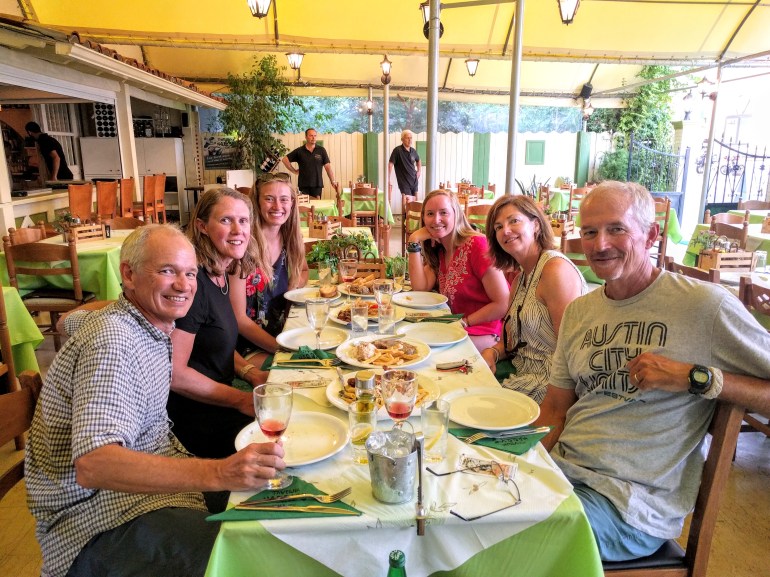
The Winters joined us for our last week in Croatia. We had a great time checking out Korcula and some of the other Croatian islands.  Tedd is going to come back to the boat in November to help us cross the Atlantic. After spending a month sailing the southern islands of Croatia, we checked out of Croatia in Cavtat and sailed 200 miles south across the Adriatic to Corfu, the northern most Greek island in the Ionian Sea.   Greece was our 5th country to visit on our quick summer tour of the Mediterranean. We only were able to spend a few days there before we started around the boot of Italy back towards France but we had time for some great Greek food.

IMG_20170803_201432FullSizeRender


Croatia

We checked out of Montenegro early in the morning and motor sailed to Catvat, Croatia in sloppy seas left over from big winds the night before. We arrived before noon to avoid stronger winds later in the afternoon. We checked into the country and obtained a 30-day cruising vignette, which gives us the ability to sail here for the next month. Croatia declared independence in 1991 which led to war with Yugoslavia and Serbian paramilitary groups.  The Croatians won the war in 1995 and ended up with much of the coastline and islands of the former Yugoslavia.  Croatia is now part of the EU.

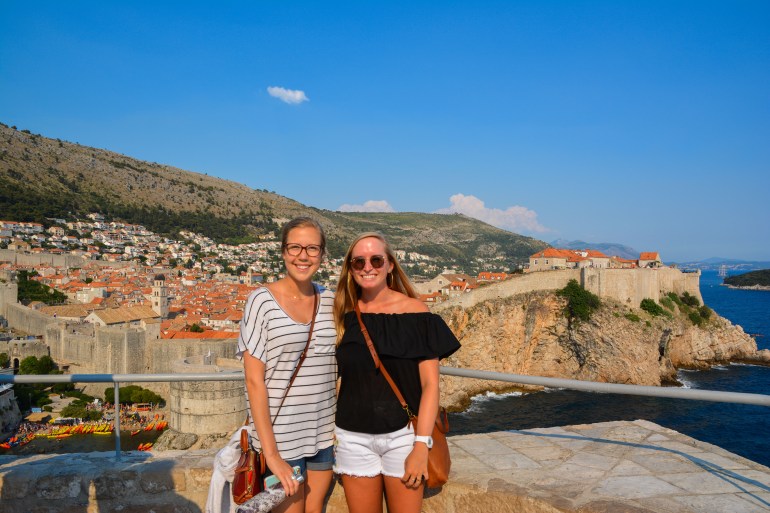
Cameron, Travis, and Kyle Floyd have been traveling around northern Europe for the past month. They joined us on the boat for the final week of their trip on July 6. We spent a week sailing with them from Dubrovnik to the islands of Mljet and Korcula and then back to the mainland. The northern portion of Mljet is a Croatian national park and has some very pretty, protected anchorages. We spent a couple of nights in the park near the town of Polace and saw the Monastery on St. Mary’s island.   We then sailed up the Korcula area. We anchored the first night off the island for Badija. A local Catholic diocese owns the island. It has a large monastery built in the 1500s. We spent the afternoon swimming and paddle boarding in about 20 feet of very clear water. The next day we took a slip in the marina in Korcula town. It was not very full when we arrived at 1 pm. By 5 pm though, the place was packed with sailboats. Korcula is a small, walled Venetian town (like a small Dubrovnik). It is built on a peninsula jutting into the bay between the islands of Korcula and Hvar. A 2500 foot peak on Hvar overlooks Korcula town and the bay. The town has been occupied since prehistoric times. Marco Polo was born in Korcula in 1254 and the House of Polo remains in Korcula. We spent the afternoon walking around the town and eating in some good restaurants. The next day we started back towards Dubrovnik. It has been unusually hot in Croatia. We don’t have A/C on the boat so the heat can be noticeable during the day. At night, it usually cools down enough to sleep. We anchored the last night of the boys’ trip in the bay near Zaton on the mainland so they could catch a cab early the next morning to the airport to start back to Houston.  Cameron, Haley, and Travis turned 23 on July 13. Before they left, we celebrated in a small Croatian restaurant serving traditional Croatian fare. We really enjoyed having everyone on board all week.

Montenegro

The Heikell cruising guide accurately predicted the start of the south-bound current in the Straits of Messina. Fortunately, it started at 0530, which was also sunrise. We had a quick trip through the straits dodging the ferries running over to Sicily. We sailed to Rochelle Ionica on the south coast of Italy. There are few anchorages and harbors on the south coast so most boats move around it quickly. We then sailed overnight to Santa Maria di Leuca, which is on the very tip and heel of Italy arriving about sunrise. We spent a day in Leuca seeing the town, buying food, and checking out of Italy.

OLYMPUS DIGITAL CAMERA

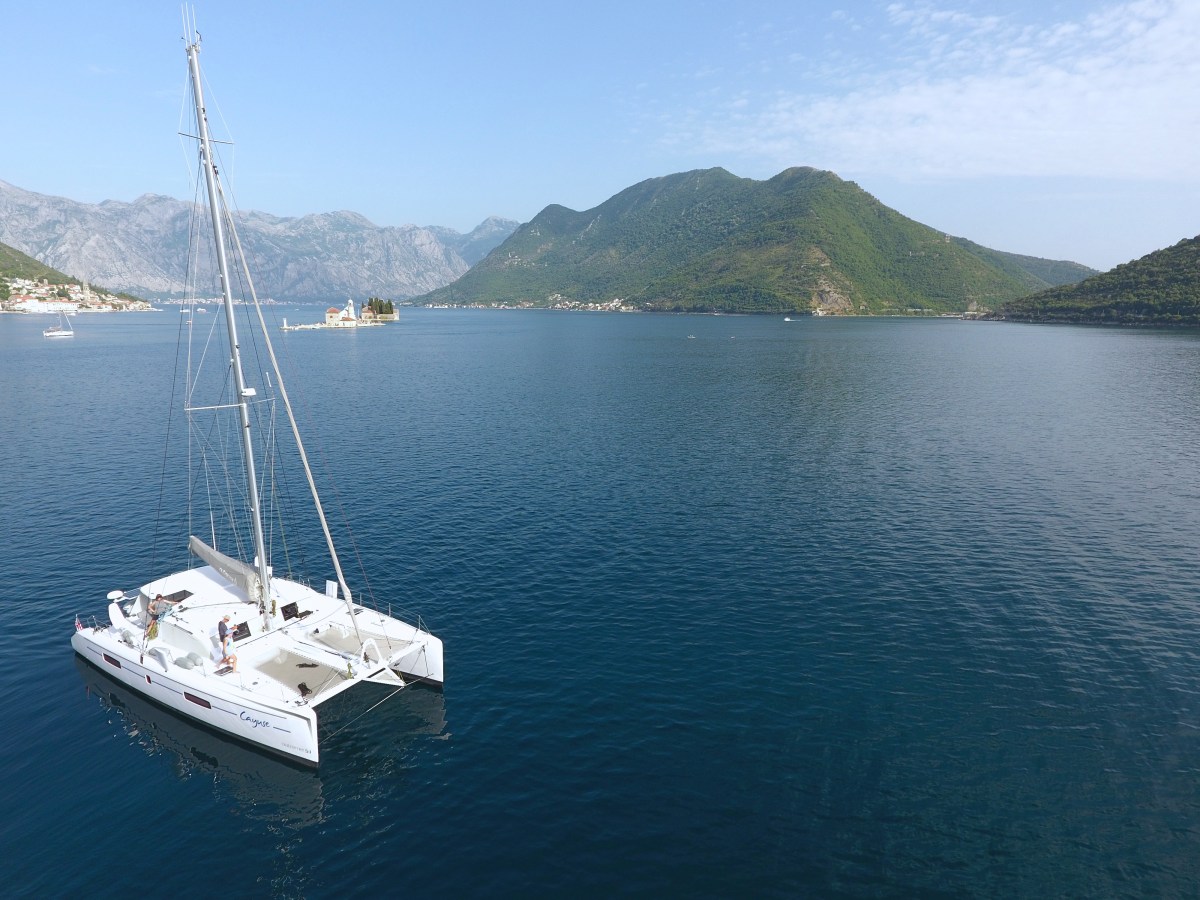
The next day we made a short run up to Otranto, which has a small anchorage in the harbor to get ready to cross the Adriatic to Montenegro.   We left Otranto around 1000 and had light air to start but by sunset the wind had filled in and it was blowing 18 to 20 by midnight. We had to reef the sails because we were going too fast and were going to arrive before sunrise. I did not want to enter the Bay of Kotor at night. The Bay of Kotor is Europe’s southern most fjord. It is spectacular. It is hard to get a perspective on how large the bay is. The Venetians built the walled town of Kotor, which looks a little like a town from Lord of the Rings. Montenegro, which was part of the former Yugoslavia, became independent in 2006.  The country was in the news this week because of a threat made by the Russian prime minister about Montenegro joining NATO last month. Reportedly Russian politicians and oligarchs own 50% of the real estate here. We are heading to Dubrovnik, Croatia tomorrow.


Moving South

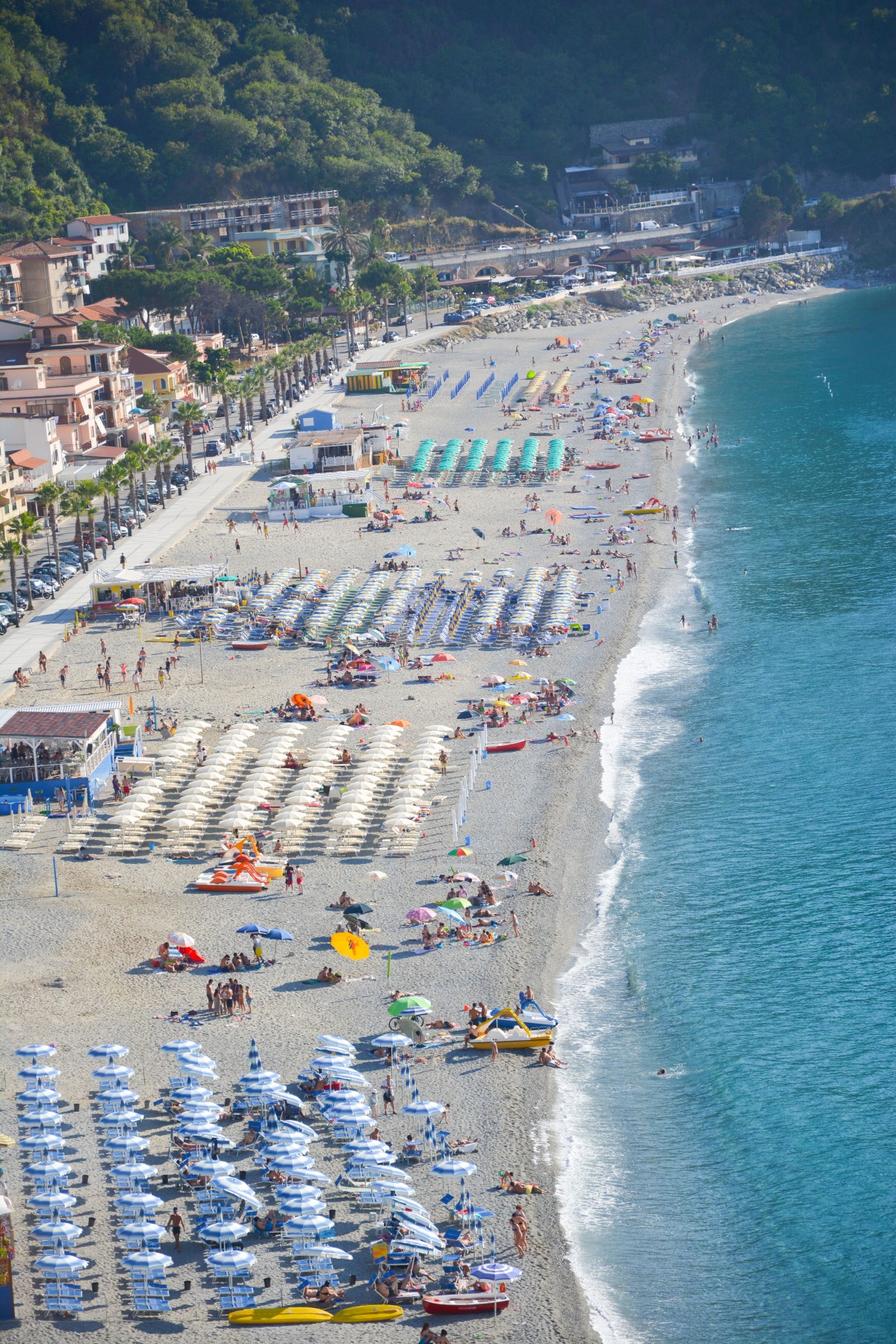
After visiting Pompeii and hiking to the top of Mt. Vesivius, we left Procida and sailed by Capri over to the town of Positano, on the Amalfi coast, where we anchored for one night. It is a beautiful place, but packed with young American couples and students. The anchorage is very rolly (even on a cat) due to all the boat traffic. We left Positano the next morning early and sailed to Sapri, a small town on the southwest coast. We spent a day in Sapri walking around the town waiting for the Tramonte to wind down in the Adriatic (strong winds in the Adriatic on the other side of Italy).  We then sailed to Vibo Valencia, sailing fast, and covering 84 miles in about 10 hours or so. We sailed over to Scilla, planning to transit the Straights of Messina, which is one of the trickier channels for small boats to pass through due to ship traffic and strong currents.  Scilla is one of the towns Odysseus visited in Homer’s Odyssey and where Scilla (a 12-legged monster) lived attacking passing ships.

Procida and Pompeii

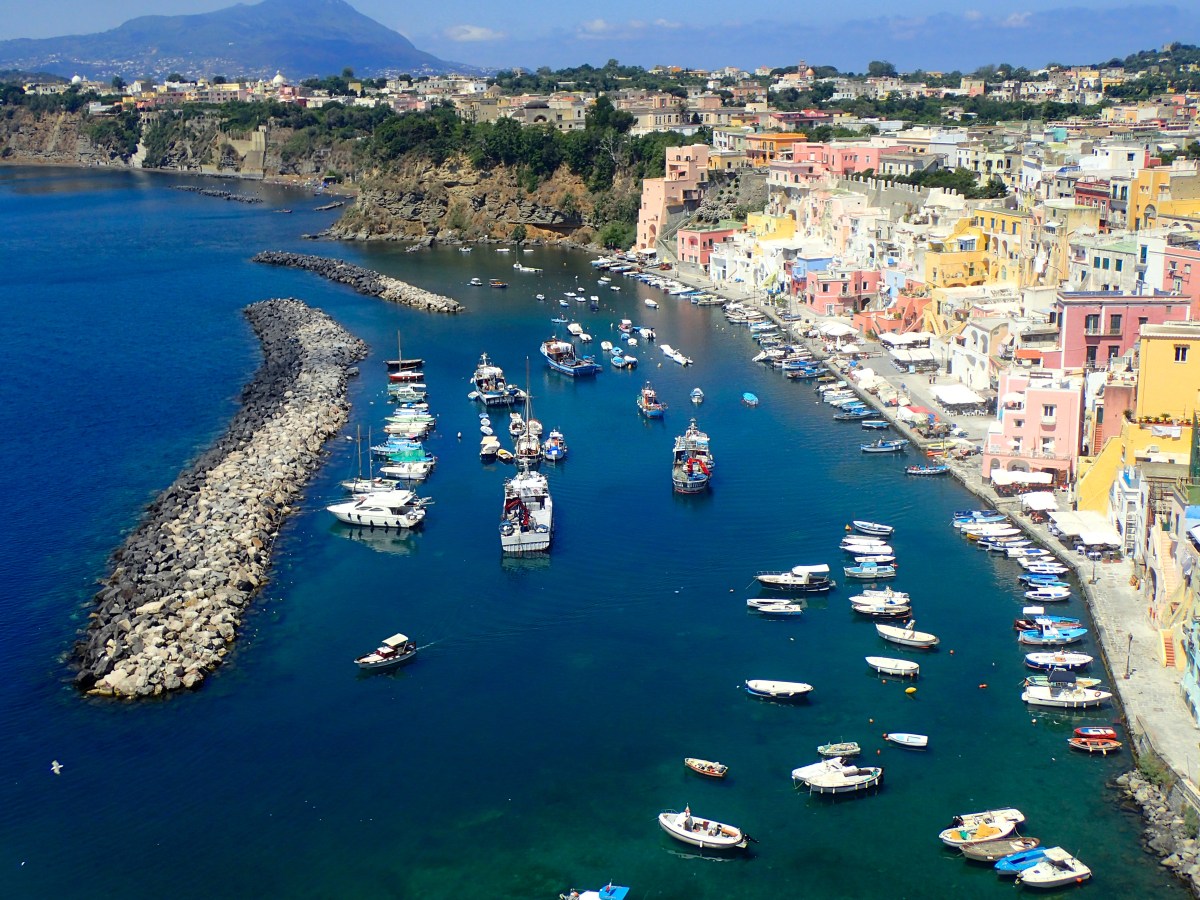
We left Ponza and had a great downwind sail to Isola di Procida jibing the Code D. We were sailing 5 to 6 knots in 8 to 9 knots of breeze. The boat sails very well in light air. Procida is a small island about a mile off the coast from Naples. There have been more than 30 movies shot there, including The Talented Mr. Ripley, with Matt Damon, which can be seen on Netflix. While in Procida, we rode the ferry over to Naples and spent a day seeing Pompeii and hiking up Mt. Vesuvius.


Older Posts