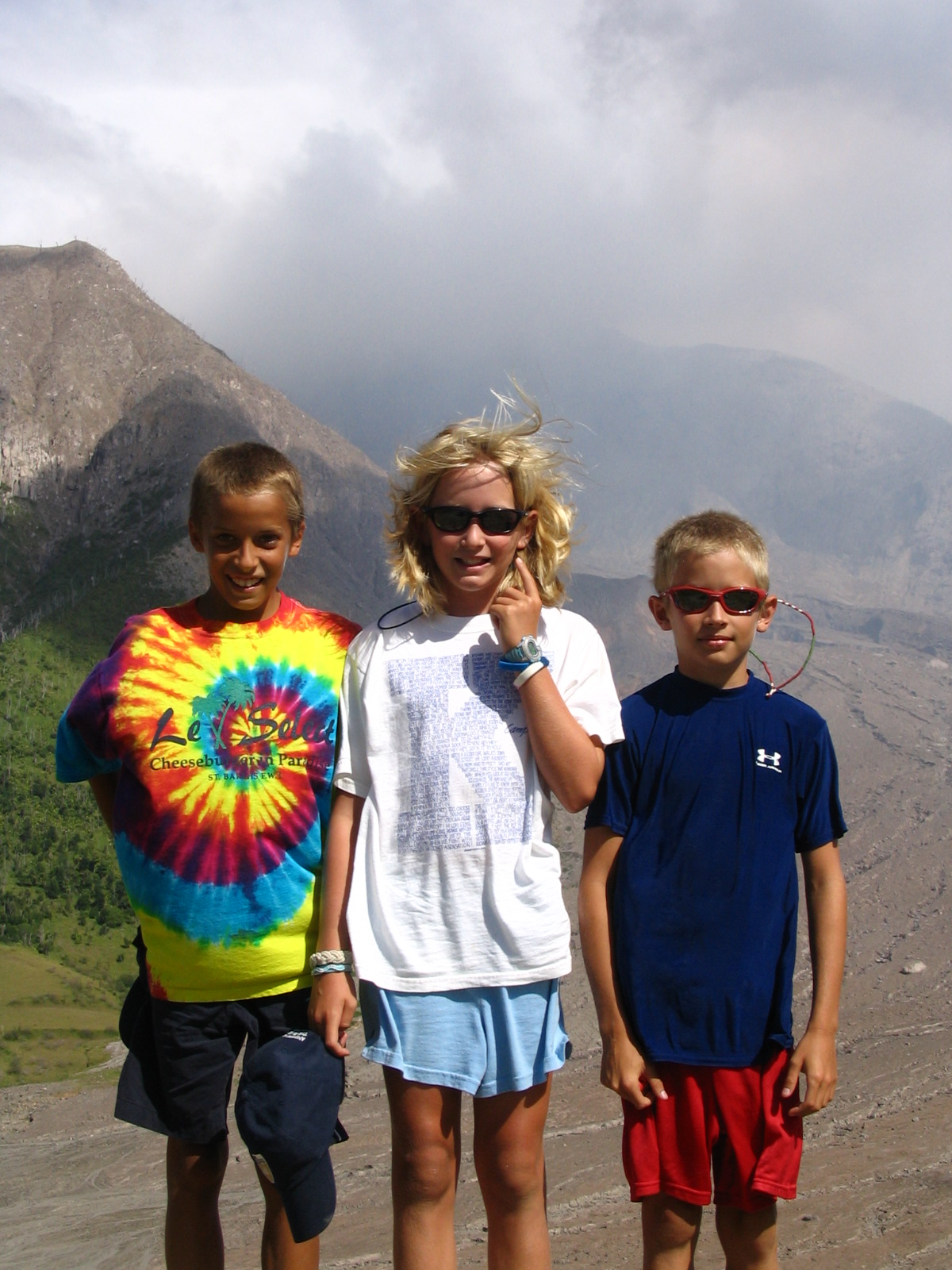
We sailed back to Bequia from Union Island to pick up Austin Espey, a friend of Travis and Cameron, who flew down for Spring Break. The day after he arrived we took the ferry from Bequia over to St. Vincent and drove up to the north end of St. Vincent and then hiked up to Trinity Falls. A very strenuous hike which at times was so steep that we had to use ladders. We ate lunch and swam at the falls.  The north end of St. Vincent is very tropical (similar to Dominica) and not very densely populated. Most of the St. Vincent Rasta men live on the side of Mt. Soufriere in this part of the island. On the way to the falls we passed through Wallilabou, where filming of Pirates of the Caribbean II and III was about to begin. Both films will be shot at the same time. After returning to Bequia, we headed back down island for a week in the Grenadines. Our first stop was back to Chatham Bay on Union Island, which was one of our favorite anchorages in the Grenadines (and the Caribbean). A very large protected bay with beautiful coral, a huge white beach, and lots of fish. It is not developed and a little off the beaten path so typically there are only few boats there. After a couple of days, we headed back to the Tobago Cays.
 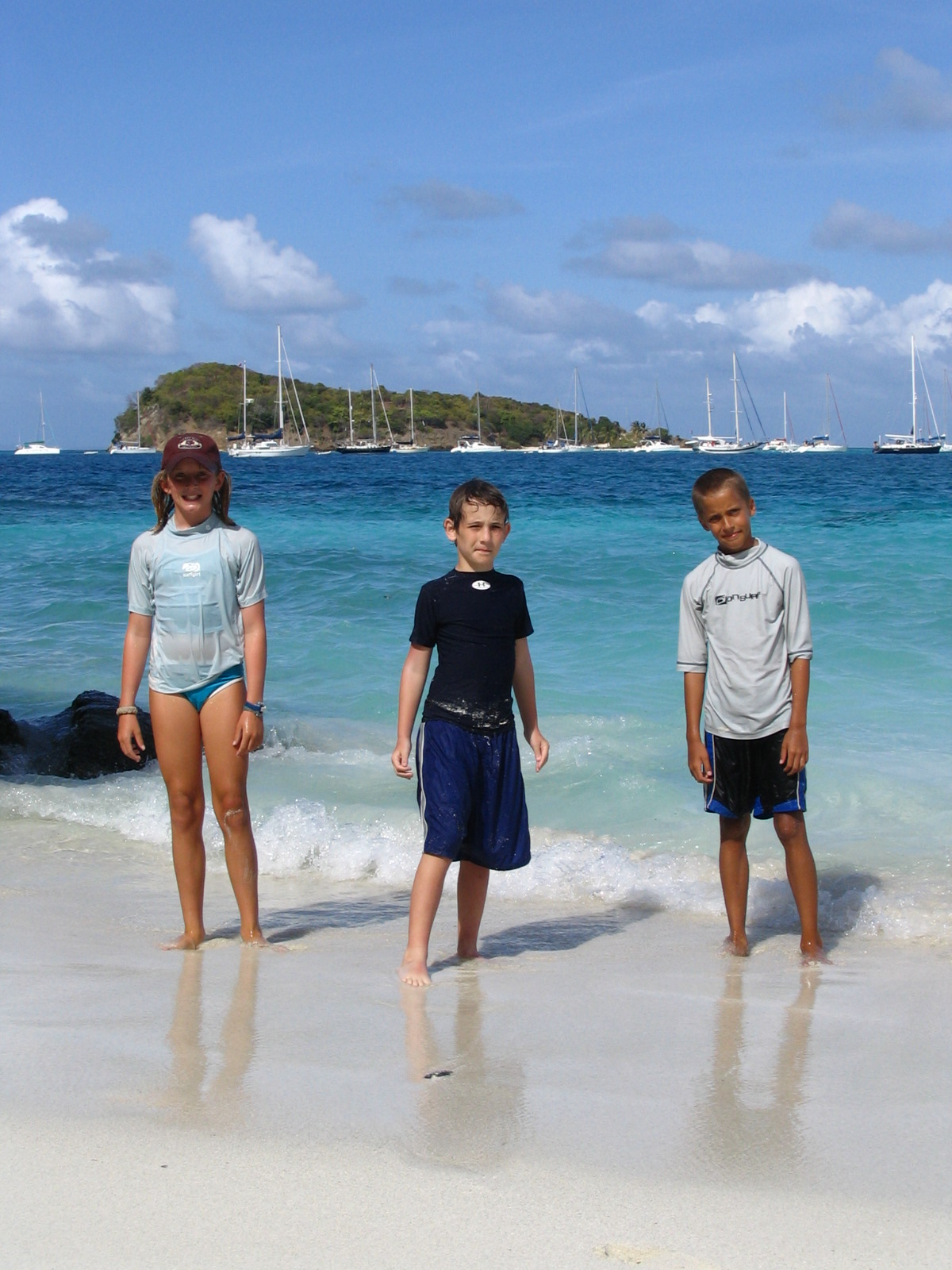 We ended up in a great spot off of Petit Bateau. Interestingly we had a couple of boats next to us that had sailed down from Norfolk in the rally in November. The number of boats from the U.S. cruising full time in the Caribbean is relatively small and we saw the same boats in many of the anchorages. After the Tobago Cays, we sailed up to Canouan and spent the night there. Entering the harbor we sailed into the strongest squall we have experienced yet while in the Caribbean. The wind gusted to 30 knots, driving rain, and no visibility. Fortunately, it did not last long. After a night in Canouan, we sailed back to Bequia where Austin headed back to Texas. While Austin was with us, we were probably the only small boat in the Eastern Caribbean with 4 ten-year old kids on board.
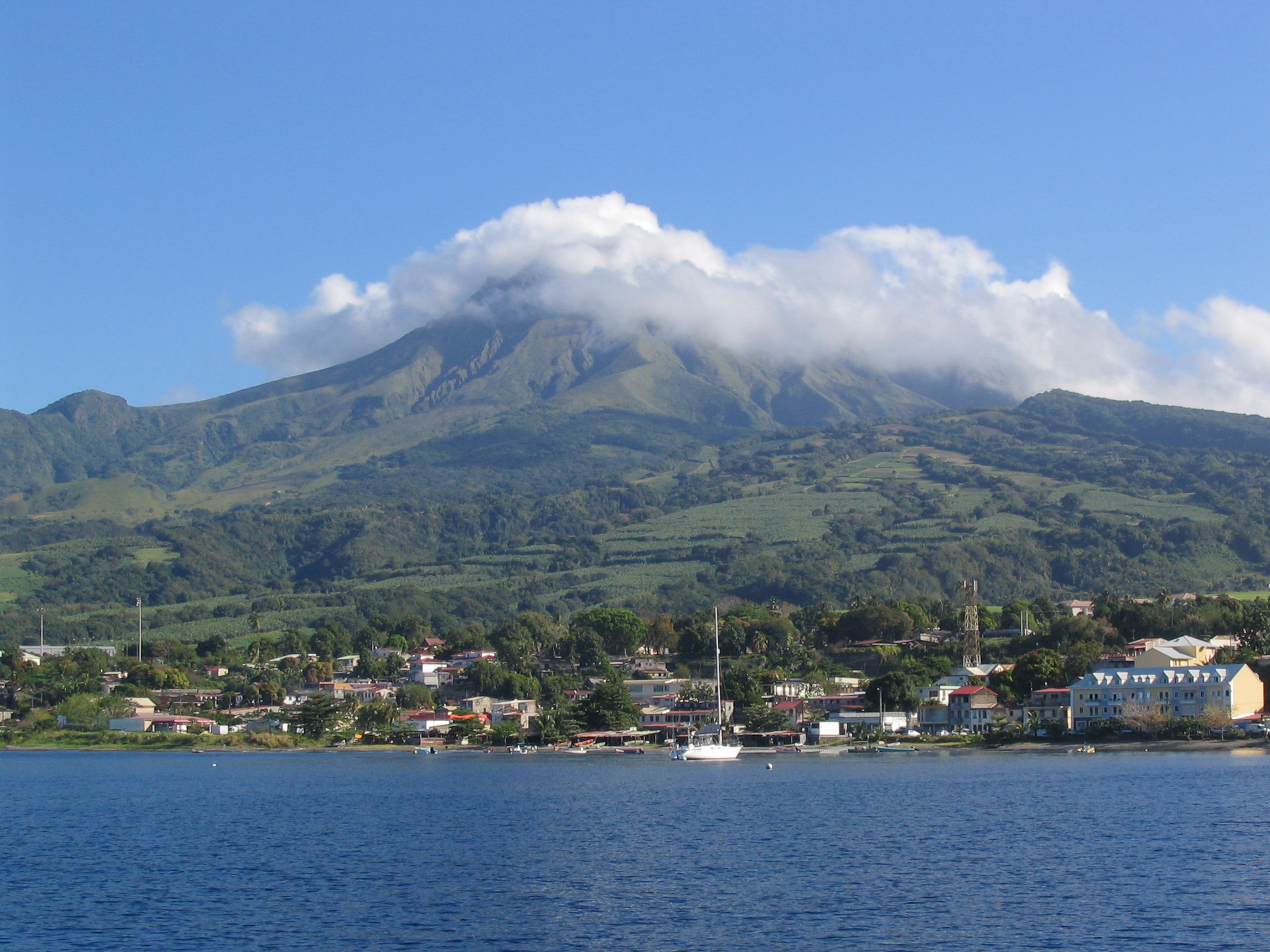
The morning after Austin left, we started our trek back to the north. We left Bequia at 5:00 a.m. and sailed up the west side of St. Vincent to Rodney Bay, St. Lucia, about 80 miles. A very long day. Rodney Bay Marina is where the ARC (Atlantic Rally for Cruisers) finishes each year so there are lots of European boats in the marina and in the area. After a couple of days in Rodney Bay working on the boat, we sailed up to St. Pierre on the French island of Martinique. St. Pierre is a small town with a long history at the base of Mt. Pele on the north end of the island. After anchoring off the town dock, we spent a couple of hours at the local museum. St. Pierre was established in the 1600’s and by the late 1800’s was known as the Paris of the Caribbean with over 30,000 residents. But, on May 8, 1902, Mt. Pele intervened. It erupted and destroyed the entire town, including most of the ships anchored in the harbor. The side of the volcano facing the town collapsed releasing a fireball of superheated gas that rolled down and burned the entire town killing all of the residents except one. The only survivor (a man named Cyparis) was locked up for murder in the solitary confinement cell in the basement of the local prison. Although he survived, he was burned badly. After recovering, he spent the next 20 years or so as a side show act in the Barnum and Bailey circus touring the U.S. Many of the ruins still remain in the town. We toured the local theater that was built in the late 1600’s. The town now has only about 6000 residents and Mt. Pele is considered dormant.
After leaving St. Pierre, we sailed up to the town of Roseau which is the capital of Dominica. There were only a couple of boats anchored off the town. Dominica is a place where it is customary to hire a “boat boy” when you stop (and a good idea; a sailboat anchored near us that failed to hire a boat boy was robbed while they slept when we were in Roseau). He helps with customs, arranges tours, and otherwise helps you get around the country while you are there for a fairly small amount. We hired a guy named Pancho. The first day there we took a tour with Pancho up to Victoria Falls on the east side of the island. We drove up into the mountains to the river downstream of the falls. We then hiked up a flowing river bed, crossing the river 5 times, to get up to the falls. There was no trail and we had a very steep hike climbing over huge boulders. At the base of the waterfall there was a large pool where we tried to swim, but it was difficult. The water is very cold and the falling water generates a very strong breeze and blowing spray. After hiking down, we ate lunch with a Rasta man named Moses. He lives with his family along the river in a small corrugated tin structure with no running water or electricity. He cooked us a stew that was made from Calulu, Daphene, and other roots grown near his house. He also made a salad out of a vegetable that looked a lot like spinach (but we were unsure what it was). The bowls and spoons he used where made from coconut shells. The kids loved it.

After lunch, we drove over to the Emerald Pool, a tropical rain forest in a U.N. World Heritage Site, and swam. Dominica was one of our favorite islands to visit. After a couple of days in Dominica, we headed up to the Iles de Saintes.

We sailed up from Dominica on a day when the trades were blowing vigorously. We had winds from the east at 20 to 30 knots and 8 to 10 foot seas. The boat loves those conditions and we were reaching along at around 9 knots. Because the easterly trades where blowing steadily, we elected to head to the island of Terre D’en Haut and anchor off the town of Bourg de Saintes which provided good protection from the east. It is very hard not to like the small towns on the French islands. Great restaurants and stores, beautiful beaches, and nice people. We spent 4 days in Bourg de Saintes hanging out on the beaches and eating in the bakeries and restaurants. Because of the current weakness of the dollar against the euro, the French islands can be a bit expensive. (Most of the other islands use either the dollar or a currency that has a fixed exchange rate against the dollar.) The next island north is another French island, Guadeloupe. We headed up the west side of Guadeloupe and stopped at Pigeon Island, a Cousteau Underwater Park. We snorkeled around the island and had great visibility in the water, in excess of 150 feet. We then headed up to Deshaies, the northern most harbor on the western side of Guadalupe and a good jumping off point for a long sail up to Antigua. The next day when we were departing for Antigua at about 6:00 a.m the windlass stopped working and we had to finish pulling up the anchor and rode by hand. The windlass is an electric device that is used to let down and pull up the anchor. Our anchor weighs 80 pounds and the chain attached to it weighs about 2 pounds per foot. We usually let out about 100 feet of rode when anchoring so having a working windlass is critical. Without a functioning windlass anchoring is difficult so we headed to Jolly Harbor, a marina on the west side of Antigua where there are several marine stores.
The day after arriving we spent about 12 hours removing the windlass from the bow (it weighs about 80 pounds and, as with most things on boats, is located in an awkward spot) and disassembling it to identify the problem. The electric motor was shot. We installed a new electric motor and rebuilt the gearbox and it is now working like new. Also, while in Antigua, we really wanted to see Montserrat, which is an island in the Leewards with an active volcano, but it is very difficult to take your boat there because much of the island is off limits. So instead we took a ferry from St. John, Antigua for day trip over to Montserrat. In 1995 Montserrat was a thriving part of the British West Indies, with about 12,000 residents. That year the Soufriere Hills volcano began erupting. The pyroclastic flow (ash, rocks, and mud) from the volcano has covered and destroyed the capital of Plymouth and the airport and many houses and hotels on the island. 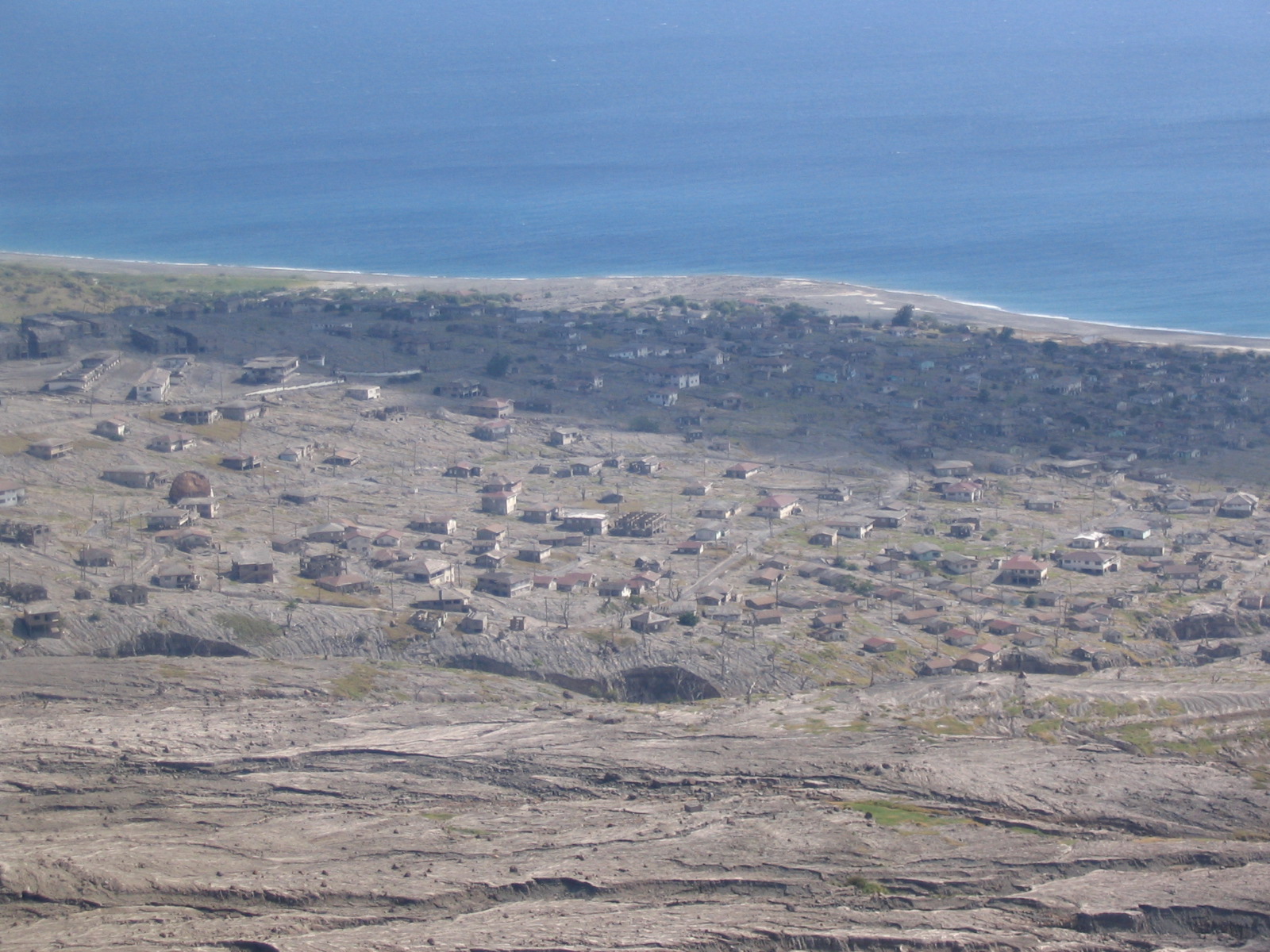 The volcano has continued to erupt with varying levels of intensity. In response to the initial series of eruptions, the British government tried to incent the Montserratians to move to London. They were hoping to remove everyone from the island and close it. They offered monetary rewards to families to resettle in London. Many folks left but about 4000 stayed and moved to the northern tip of the island, which was relatively free from the effects of the eruption. The southern part of the island is called the Exclusion Zone. We took a tour of the Exclusion Zone with a local guy whose house was covered by ash and lava. Everything in the Exclusion Zone looks like it did before the eruptions began. The buildings remain mostly undisturbed except that they are partially filled with mud and ash from the pyroclastic flow.
  We also toured the Montserrat Volcano Observatory which was built by the British to monitor seismic activity around the volcano to provide an early warning of future eruptions. We met with several of the vulcanoligists and seismologists working that day.
The day after we returned from Montserrat, we left the marina and headed to the Boon Channel on the north side of Antigua and anchored in Jumby Bay. A very pretty anchorage with very fine white sand. The anchorage is exposed to the north and there was a big north ground swell running, but we were behind a reef and the water was very flat. The north ground swell has affected our sailing and anchoring the whole trip and was not something we had anticipated. When fronts move off the U.S. east coast, they usually track east and northeastward near Bermuda. The fronts never make it to the Caribbean but the low associated with the front creates waves that make it all the way down into the southern Caribbean. Because the trade winds blow from the east most of the anchorages are on the western shores of the islands. But when a big north swell is running, it can roll right into the western anchorages and make them uncomfortable and sometimes untenable.
After a few days on the north side of Antigua, it was time to continue north, which meant a very long sail on a light air day to St. Barth. The sail was very uneventful until we where about 10 miles from St. Barth and a humpback whale started leaping out of the water on our starboard side. The whale breached at least 20 times before we passed it. That was our third recent whale sighting. On one of our trips into Bequia, a humpback whale swam up along side the boat about 100 feet away and then when we arriving in Roseau, Dominica, three sperm whales started slapping their tales in unison on the surface. It looked like they were putting on a show.
Once in St. Barth, we ended up again in the inner harbor arriving the day after the St. Barth’s Bucket Regatta ended. It is a sailboat race for boats over 100 feet in length. Several of the restored J Class America’s Cup boats were in the harbor, including Ranger and Endeavour. St. Barth is another great French island with a very well run port. We read that the French subsidize about 1/2 of the per capita income of the French West Indies which may explain why the standard of living appears so much better there.
After St. Barth’s, we stopped for few days in St. Martin to re-provision and fix a few things on the boat and then sailed over to Road Bay, Anguilla. Anguilla is a part of the British West Indies and is a low, dry island. But it has some of the best water and beaches in the Caribbean. We anchored in Road Bay with a few other cruising boats. The harbor was full of green turtles. We had turtles around the boat the entire time we were there. Anguilla is a lot like the British Virgin Islands were 25 years ago.
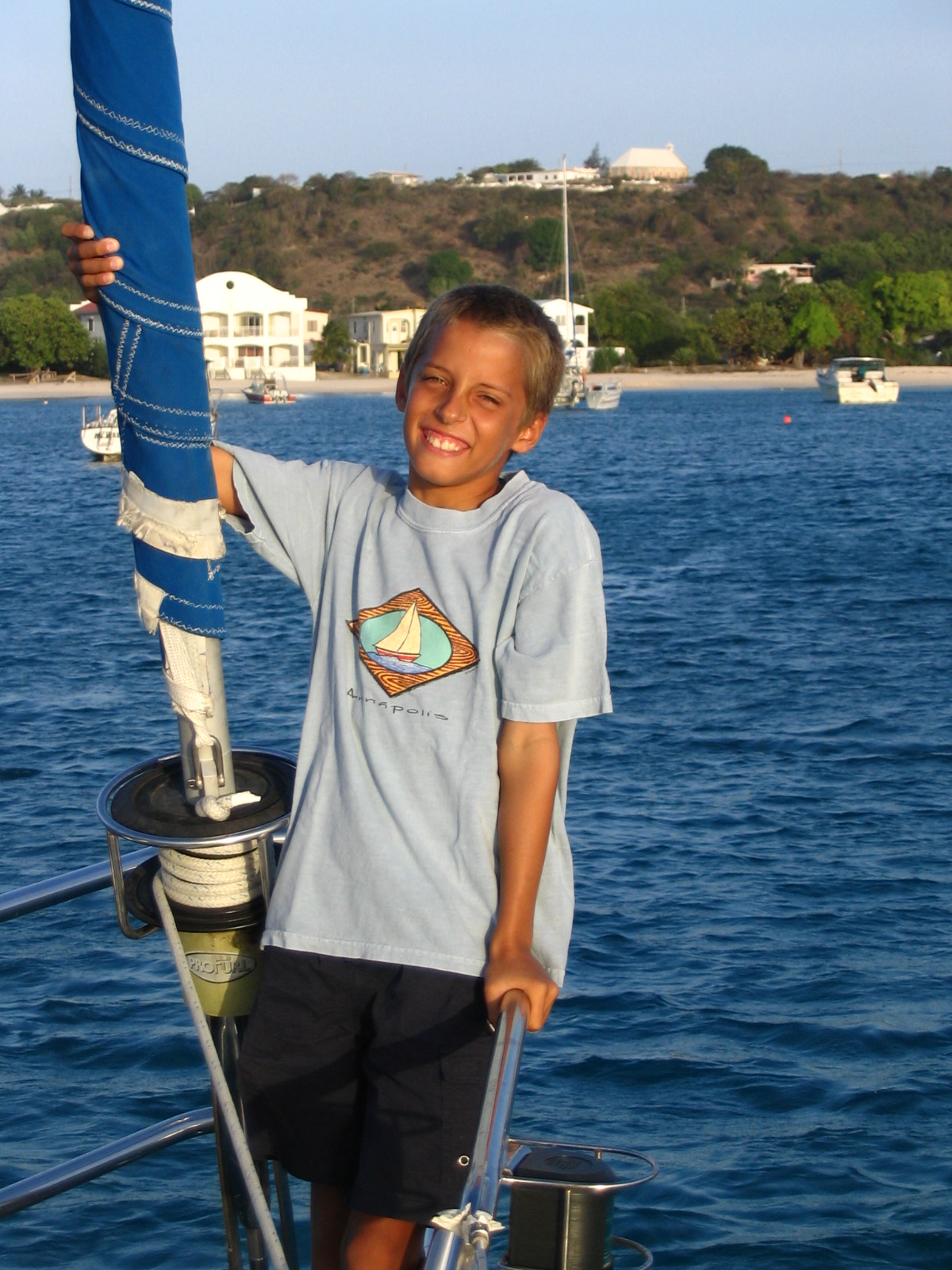
After a few days in Anguilla, it was time to head back to the BVI’s. Because of the distance, this sail has to be started in the evening so that you can arrive in daylight. We left Anguilla at 6:00 p.m. and headed to the north end of Virgin Gorda. At about 11:00 p.m., while in the Anegada Passage, we had a close encounter with a freighter. The freighter appeared in the distance and after monitoring it on our radar, it was clear that we were on a collision course. We hailed it on the radio repeatedly, but there was no response. We then made a severe course change and it passed just off our stern. Later that night we passed several cruise ships poking along. They typically leave one port in the late evening and then motor very slowly, sometimes circling, so that they do not arrive before dawn the next day. We arrived in Gorda Sound at about 10:00 a.m. the next day. We will cruise around the U.S. and Spanish Virgin Islands fora few more weeks before it will be time to head back to Texas (and start wearing shoes again).
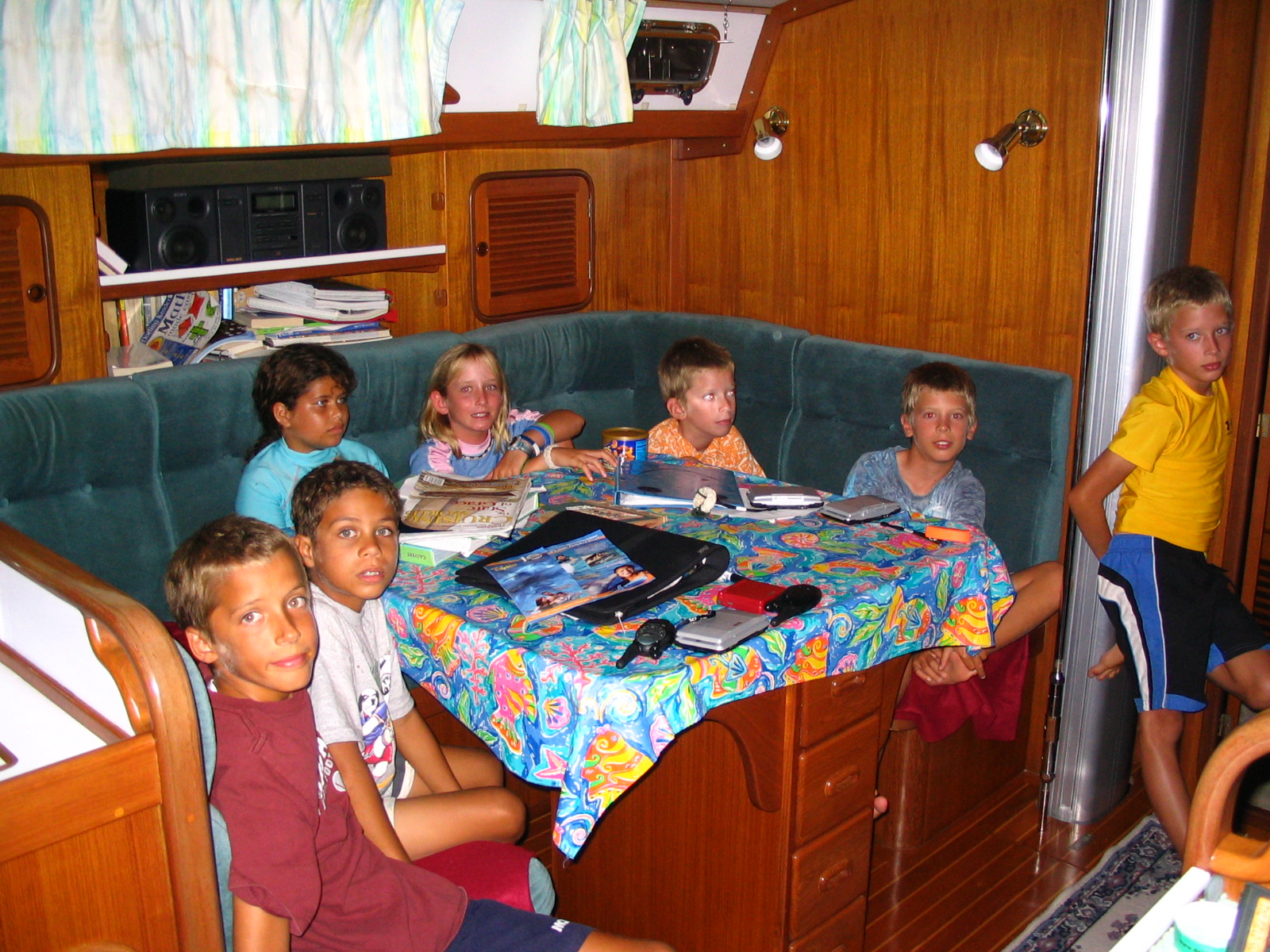
Here is a link to all of the photos from the trip. Just click here to see some great photos!
 Cayuse